
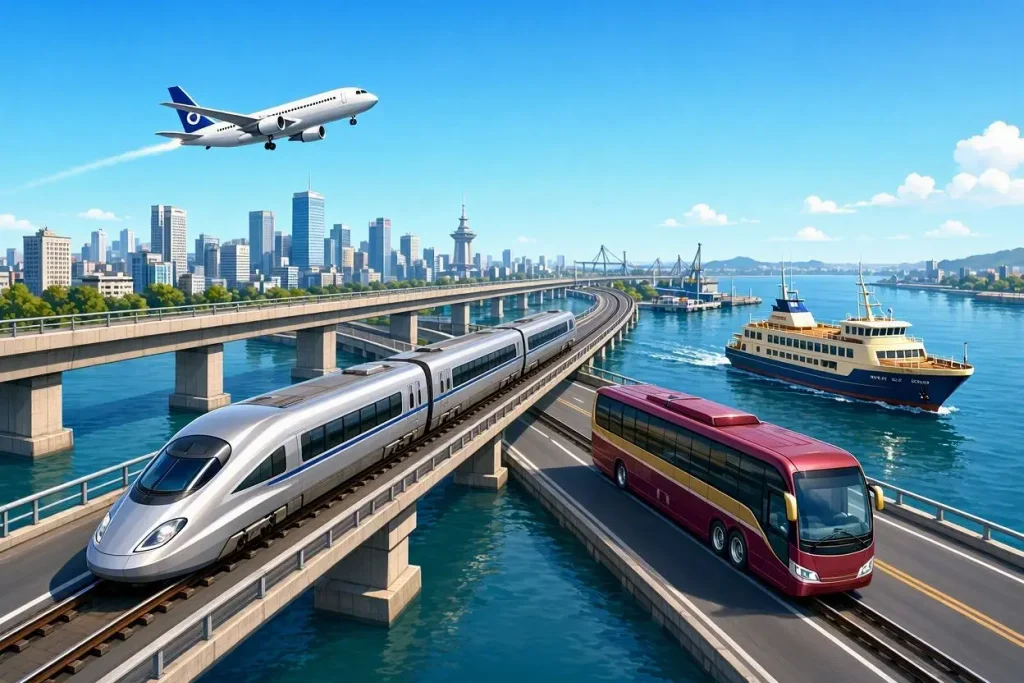
Traveling beyond Seoul to explore breathtaking cities like Busan, Gyeongju, or Jeju is much easier than you think. Korea’s intercity transportation network is extraordinarily fast, punctual, and budget-friendly.
Whether you want to catch a high-speed train, board an express bus, fly domestically, or take a ferry, this comprehensive guide covers everything you need to know about traveling outside Seoul.
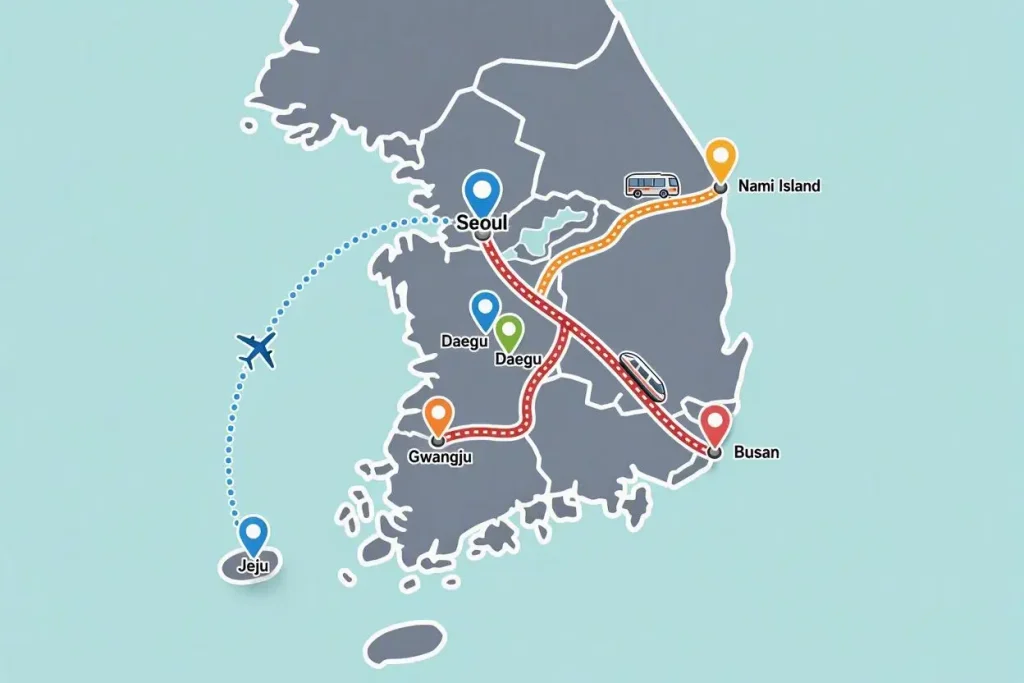
Quick Comparison: Seoul Intercity Transportation Options
| Transport Type | Speed | Average Cost | Best For | Main Hubs in Seoul |
| High-Speed Train (KTX/SRT) | Very Fast (1–2.5 hrs) | ₩30,000 – ₩60,000 | Speed, comfort, major cities | Seoul Station, Yongsan, 수서 (Suseo) |
| Express / Intercity Bus | Moderate (2–4 hrs) | ₩15,000 – ₩35,000 | Budget travel, rural destinations | Express Bus Terminal, Dong Seoul |
| Domestic Flight | Fastest (1 hr air time) | ₩30,000 – ₩100,000+ | Traveling to Jeju Island | Gimpo International Airport (GMP) |
| Ferry / Passenger Ship | Slow (Scenic) | Varies by route | Islands (Jeju, Ulleungdo) | Incheon Port, Yeonan Pier |
1. Korea’s Rail System: KTX, SRT & Regional Trains
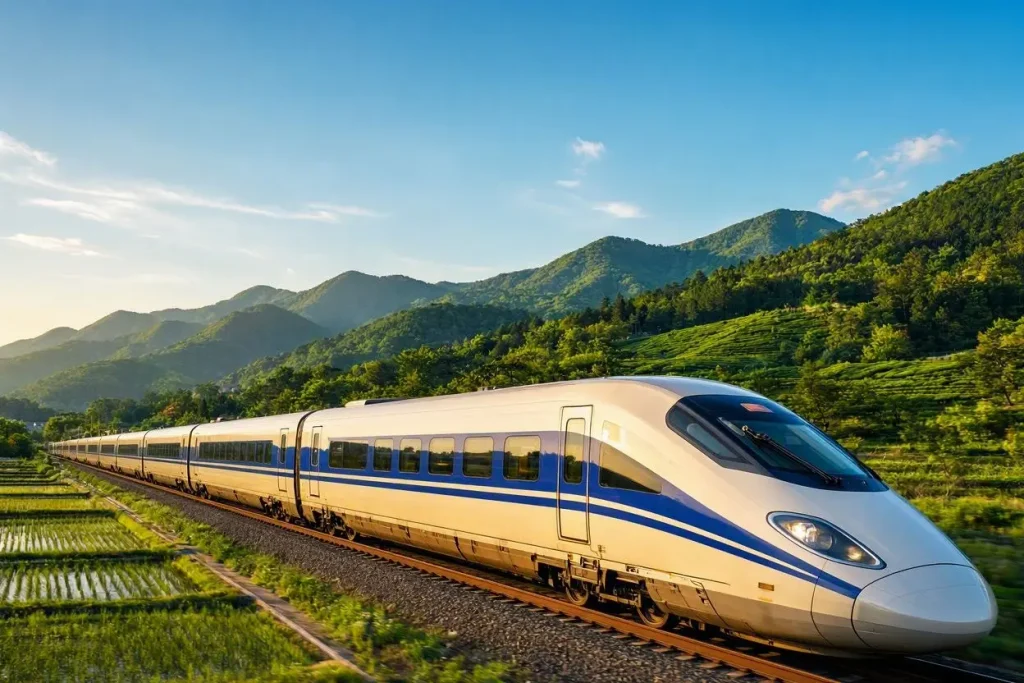
Trains are the most popular way to travel outside Seoul. They are punctual, spacious, and offer scenic views of the Korean countryside.
Train Categories You Should Know
- KTX (Korea Train eXpress): The primary high-speed bullet train operating at speeds up to 305 km/h. Connects Seoul to Busan, Gangneung, Jeonju, and Mokpo.
- SRT (Super Rapid Train): A high-speed alternative to KTX, starting exclusively from Suseo Station in southeastern Seoul.
- ITX-Cheongchun & ITX-Saemaeul: Semi-fast regional trains suitable for mid-distance trips like Chuncheon or Gyeongju.
- Mugunghwa-ho: The slowest, classical train stopping at smaller rural towns. Highly affordable for slow travelers.
Main Departure Stations in Seoul
- Seoul Station (Line 1, Line 4, AREX): Main departure hub for KTX trains heading toward Busan, Daejeon, and Gangneung.
- Yongsan Station (Line 1, 경의·중앙선): Primary terminal for KTX trains heading to the southwestern regions (Jeonju, Gwangju, Mokpo).
- Suseo Station (Line 3, 수인·분당선): Exclusive terminal for SRT trains.
How to Buy Train Tickets
- Online Booking: Use the official Korail website (Let’s Korail) or the KORAIL Talk app (supports English, Japanese, and Chinese).
- Foreign Tourist Pass: Consider getting the Korail Pass (KR PASS) if you plan to make multiple long-distance KTX trips within 2–5 days.
- On-site Purchase: Tickets can be bought at station ticket counters or automated kiosks accepting foreign credit cards.
Local Tip for Popular Routes:
KTX tickets for popular routes like Seoul to Busan open 30 days in advance and sell out rapidly during weekends and national holidays. Book your tickets as early as possible!
2. Express & Intercity Buses: The Budget-Friendly Option
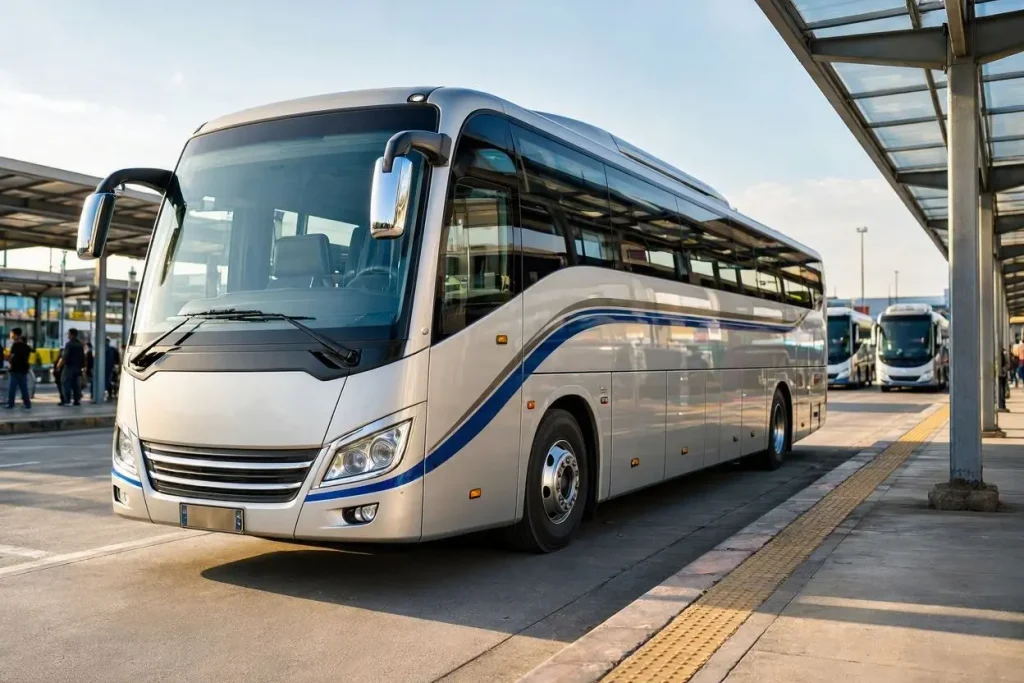
If train tickets are sold out or you are traveling to smaller towns without a rail station, express buses are your best alternative.
Main Bus Terminals in Seoul
- Express Bus Terminal (Line 3, 7, 9): The largest bus hub in Seoul. Divided into the Gyeongbu/Gyeongbuk Line (for Busan, Daegu) and the Central City Terminal (Honam Line) (for Jeonju, Gwangju).
- Dong Seoul Bus Terminal (Line 2, Gangbyeon Station): Ideal for traveling to eastern coastal destinations like 속초 (Sokcho), Gangneung, and Gangwon-do provinces.
- Nambu Bus Terminal (Line 3, Nambu Bus Terminal Station): Best for short-to-medium trips to southern provinces and hiking spots.
Bus Class Options
- Standard (일반 – Ilban): Basic 4-seat row setup; cheapest option.
- Excellent (우등 – Udeung): 3-seat row setup with wide, reclining seats and footrests. Recommended for trips over 2 hours.
- Premium (프리미엄): Luxury 3-seat configuration with personal TV screens, wireless phone chargers, and deep recline curtains.
How to Buy Bus Tickets
- You can purchase tickets directly at terminal ticket booths or kiosks using foreign credit cards.
- Online reservations for foreign nationals are available via the TxBus or Bustago official websites.
3. Domestic Flights: The Primary Route to Jeju Island
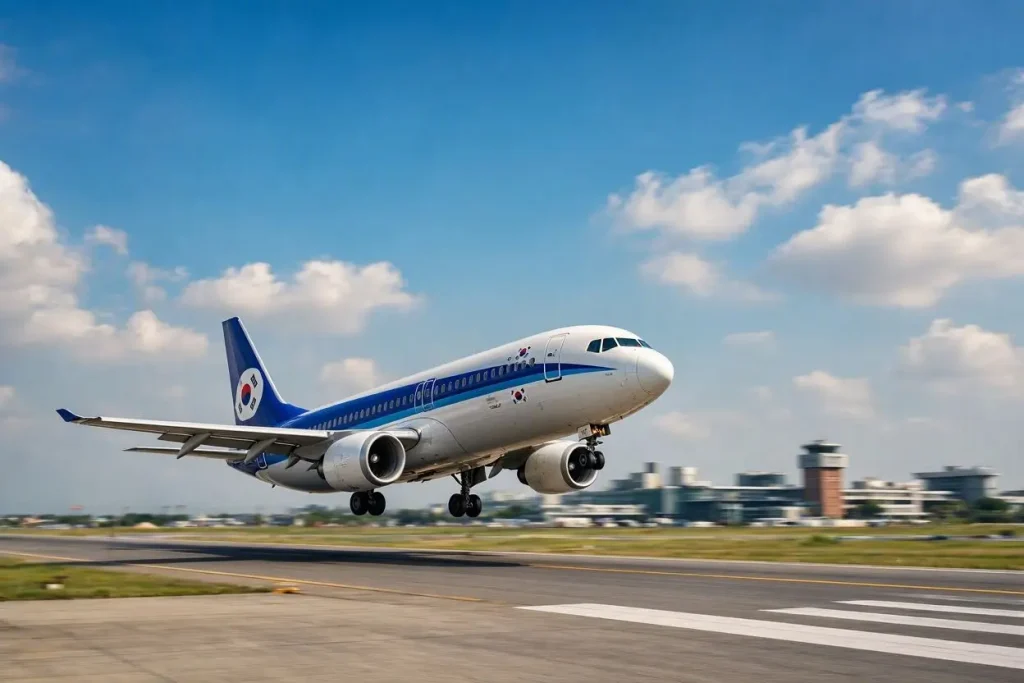
While mainland Korea is compact enough to navigate by high-speed rail, flying is the standard way to reach Jeju Island.
Airport Hub for Domestic Flights
- Gimpo International Airport (GMP): Almost all domestic flights depart from Gimpo Airport, not Incheon Airport. You can easily reach Gimpo Airport via the AREX train, Subway Line 5, or Line 9.
Major Airlines & Destinations
- Airlines: Korean Air, Asiana Airlines, Jeju Air, T’way Air, Jin Air, and LCCs.
- Popular Routes: Gimpo (GMP) to Jeju (CJU) is the busiest air route in the world. Flights also operate to Busan (PUS) and Yeosu (RSU).
Local Tip for Airport Arrival:
Arrive at Gimpo Airport at least 1 hour before domestic departure. You must present a valid passport for identity verification at the security checkpoint.
4. Ferries: Reaching Korea’s Scenic Islands
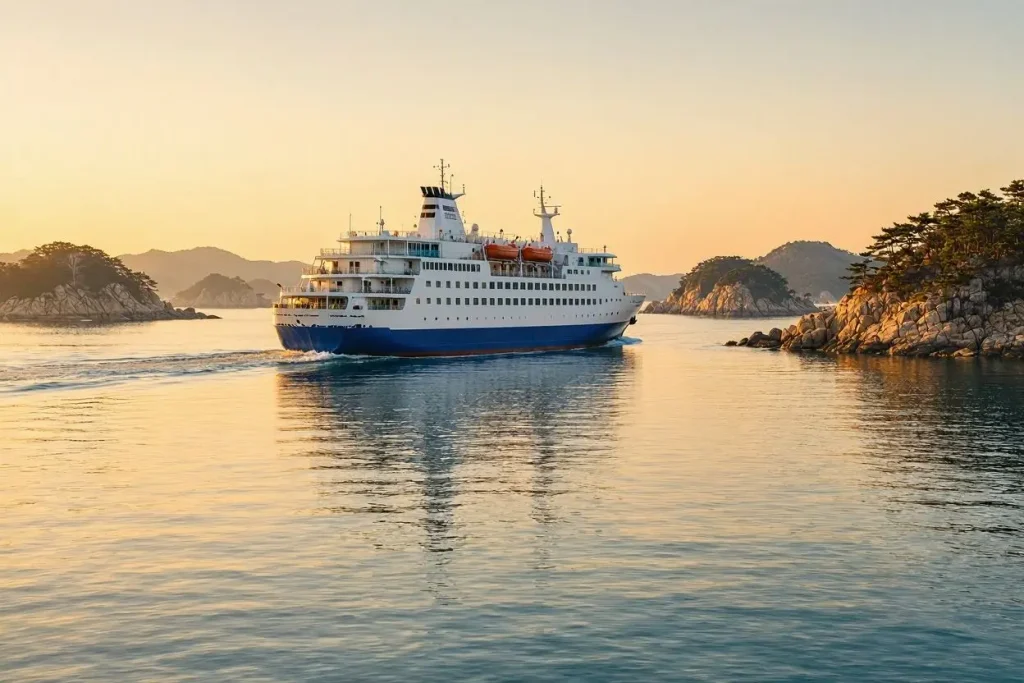
Korea has thousands of beautiful islands along its western and southern coasts.
Main Ferry Gateway near Seoul
- Incheon Port International Passenger Terminal: Located in Incheon (accessible via Seoul Subway Line 1 and buses), serving ferries to offshore islands like Muuido, Yeonpyeongdo, and Baeknyeongdo.
- Mokpo / Yeosu / Busan Ports: For traveling to distant southern islands or Jeju via overnight cruise ferries, take a KTX train from Seoul to southern port cities first.
Essential Travel Tips for Intercity Navigation
- Luggage Rules on KTX: KTX trains do not have strict luggage weight limits, but you must stow your bags on designated overhead racks or end-of-car luggage racks yourself.
- Navigation Apps: Google Maps does not support turn-by-turn walking/driving directions in Korea. Always download Naver Map or KakaoMap for real-time bus and train terminal navigation.
- Rest Stop Culture (휴게소 – Hyugeso): Long-distance express bus rides usually include a 15-minute break at highway rest stops. Try local street foods like walnut cakes (Hodu-gwaja) and grilled squid!
📌 Summary of Korea Intercity Transportation Options
| Mode | Key Strengths | Best For | Booking Platform |
| KTX / SRT (High-Speed Rail) | Fastest, highly punctual, reaches major hubs | Long-distance travel to Busan, Gyeongju, Gangneung, Jeonju | Korail (KTX) / SR (SRT) official apps & website |
| Express & Intercity Buses | Extensive routes to small towns, frequent schedules | Budget travelers, mountain/coastal towns (Sokcho, Seoraksan) | T-money GO / Bustago app & website |
| Domestic Flights | Shortest travel time for extreme long distances | Traveling to Jeju Island or coastal cities (Yeosu, Gimhae) | Airline official sites, Naver Flights, Skyscanner |
| Ferries & Passenger Ships | The only way to access beautiful offshore islands | Island trips (Ulleungdo, Dokdo, Jeju by sea) | KSA Island Ticket (가보고 싶은 섬) |